What happened on stage
On Thursday 15 October 2026, Tesla showed its second-generation Roadster driving up a ramp, hanging upside down, and then flying off to roll in the air and land on its wheels.[1]
The event was livestreamed on Tesla’s X account from a SpaceX rocket-testing site in McGregor, near Waco, Texas.[1][2] Elon Musk, who runs both Tesla and SpaceX, said “flying cars are real”, and added that the car’s “success is not guaranteed” but that “it will probably work.”[1]
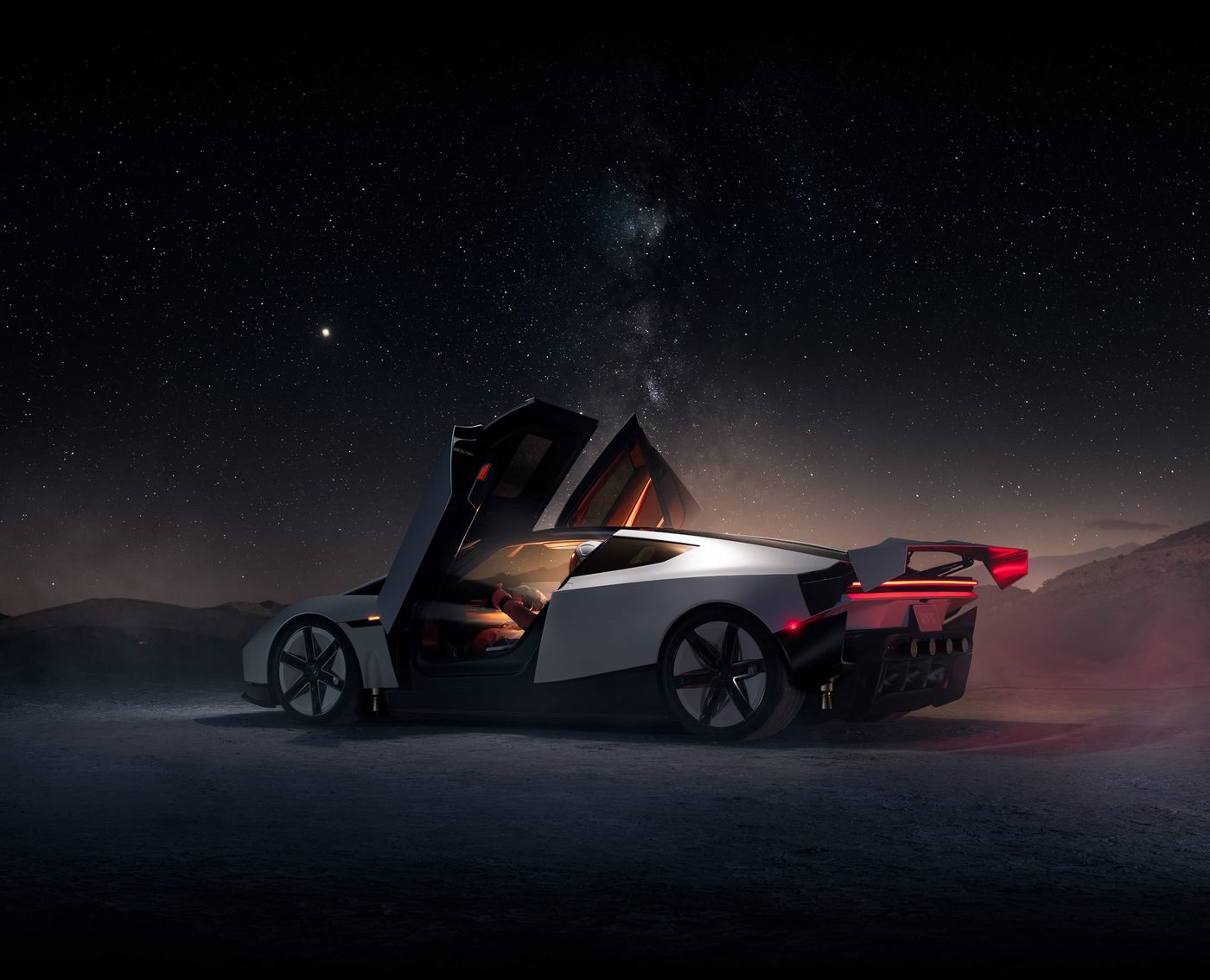
- 1
The car drives up a curved ramp that becomes a vertical wall, then an overhanging ledge.
- 2
A fan-based suction system holds it upside down against the ledge.
- 3
It drops away, rolls in the air and lands on its wheels, using cold-gas thrusters.
- 4
In a second stunt it launches over a line of vehicles, including a Tesla Semi cab.
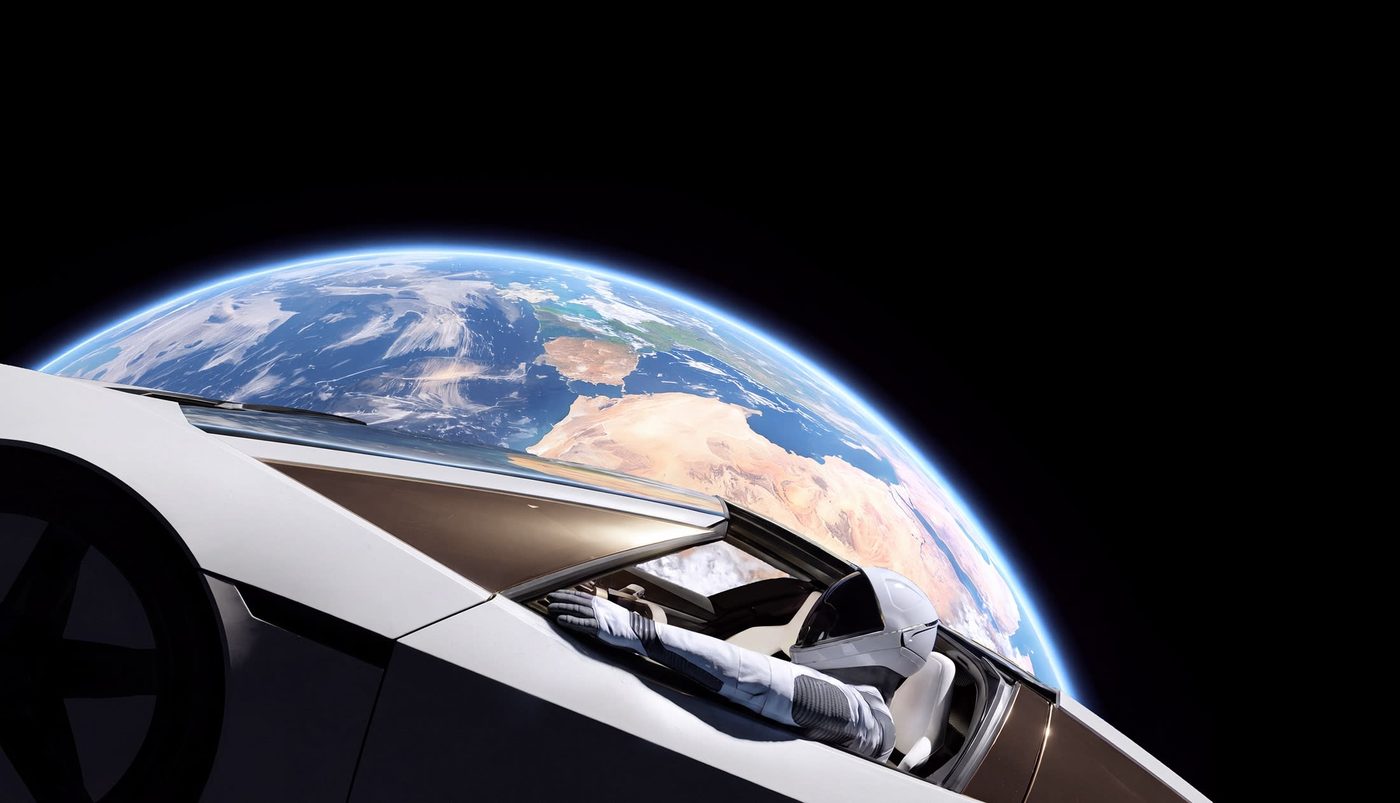
Space.com reports the driver’s seat held a mannequin in a SpaceX spacesuit, a nod to “Starman”. The sources we read do not say how the car was controlled.
The car clung to the ramp by suction, dropped away, rolled and landed using cold-gas thrusters, then used the same thrusters to leap over a line of vehicles. TechCrunch lists a Cybercab, Cybertruck, Tesla Semi, Model Y and Model 3.[3] Space.com counts six vehicles including a Semi cab and notes that the driver’s seat held a mannequin in a SpaceX spacesuit, a nod to the dummy that rode the first Roadster into space in 2018.[4]
The date matters because this car has been promised for a long time. Tesla first showed the second-generation Roadster in 2017 and, as Fox Business recounts, said deliveries would begin in 2020.[2]
- 2017
Second-generation Roadster revealed at the end of the Tesla Semi event; deliveries promised for 2020. $50,000 deposits taken.
- 2018
Musk posts that a SpaceX package would add about 10 small rocket thrusters. The first Roadster launches into space on Falcon Heavy.
- 2020–24
Delayed in 2020, 2021, 2023 and 2024, as reported.
- 2025–26
A reveal “by end of 2025”, then April 1, 2026, then 1 October 2026, which severe weather pushed back.
- 15 Oct 2026
Reveal at a SpaceX test site near Waco, Texas, livestreamed on Tesla’s X account.
- 2028
Production, according to Musk. No price announced.
As reported by TechCrunch and others. Dates of past announcements are as the press recounts them.
The three versions
Tesla now describes three versions, and it matters which one a claim is about. Performance is “road ready”, with two seats, active aerodynamics and a suction system. Thrust is “race ready”, with rear thrusters. Rocket is “air ready”, with one seat and thrusters around the car.[5]
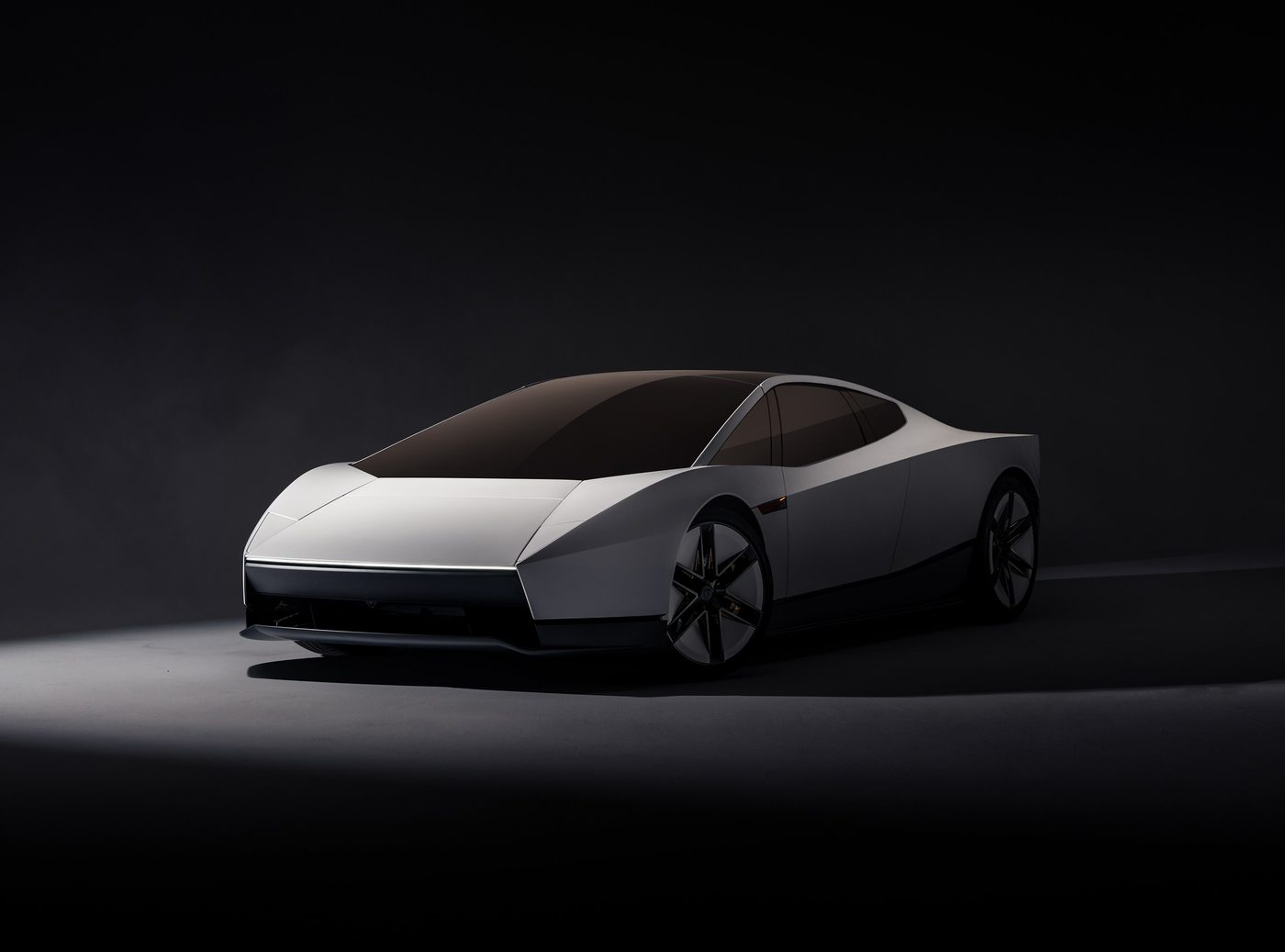
Performance
“Road ready.” Two seats. Active aerodynamics and a multi-mode suction system for downforce.
Thrust
“Race ready.” Two seats. Adds rear cold-gas thrusters that Tesla says take it from 0–60 in under 1 second.
Rocket
“Air ready.” One seat. Thrusters around the car for forward, upward and rotational movement. “So yes, it can fly.”
Quotations are Tesla’s own wording on its Roadster page. The page adds: “Not approved for public road use”, and that its listed specifications are for the Thrust augment only.
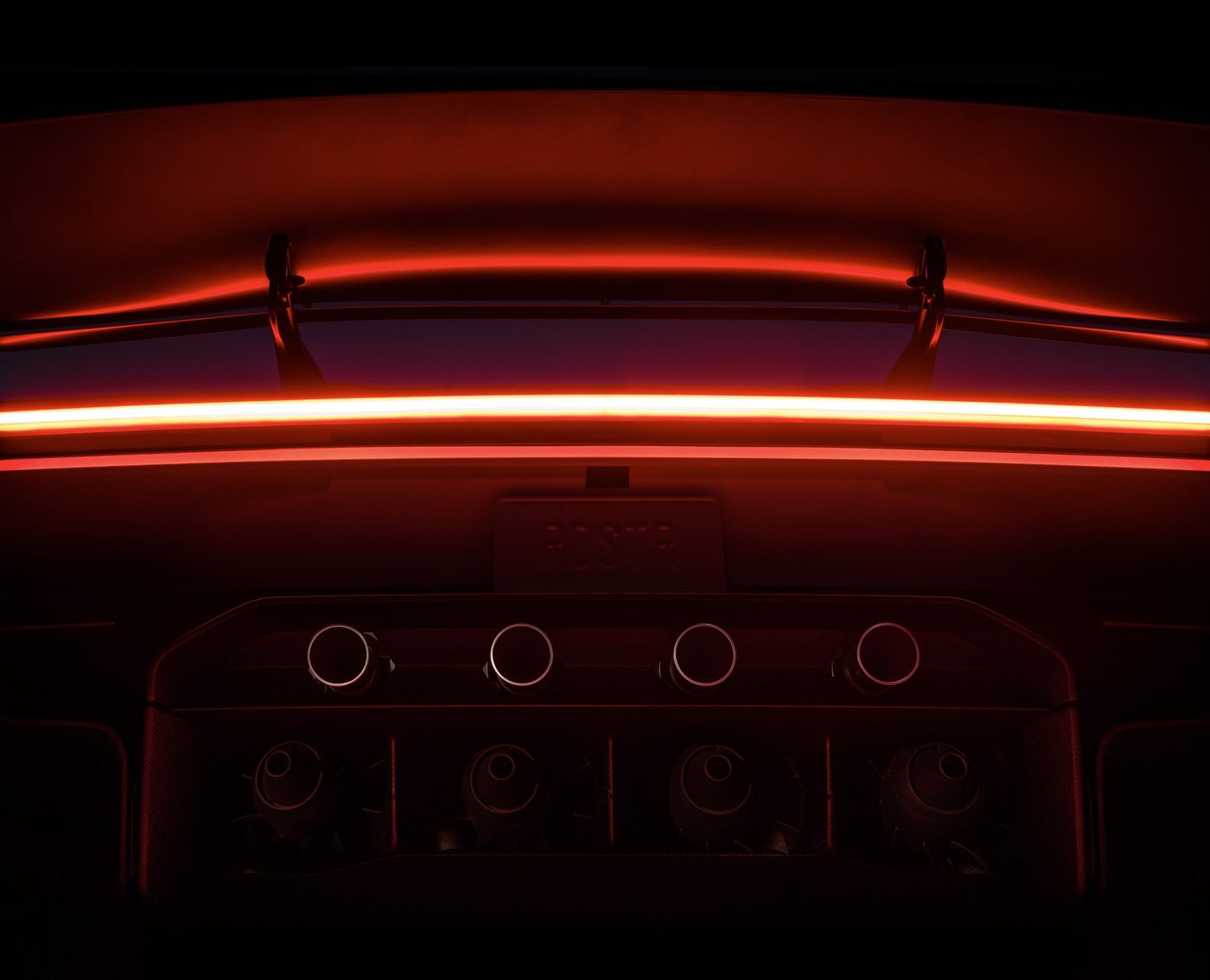
Tesla’s page says the Thrust version goes from 0 to 60 mph in under one second, and a footnote says the specifications on the page are for the Thrust augment only, an optional upgrade.[5] A day later Tesla’s X account posted a video clip captioned “0-60 mph in 0.81 seconds”.[6] TechCrunch reports that all three versions have 300 miles of range and can exceed 230 miles per hour.[3]
| Claim | Figure | Applies to |
|---|---|---|
| 0–60 mph | Under 1 second | Thrust (Tesla’s page) |
| 0–60 mph, as posted | 0.81 seconds | Tesla’s X post, 16 October (a video clip) |
| Range | 300 miles | All three trims (TechCrunch) |
| Top speed | More than 230 mph | All three trims (TechCrunch); Fox Business: Musk, “certain versions” |
| Seats | 2 (Performance, Thrust), 1 (Rocket) | Tesla’s page |
| Production | 2028 | Musk, per all four press reports |
Claims, not test results. The car was shown accelerating to 60 mph in under a second during the event, as Fox Business and TechCrunch report, and Tesla later posted a clip captioned 0.81 seconds; there has been no independent measurement.
Notice what is missing: a price. Musk named a production year, 2028, and no price.[3] Fox Business adds that a decade ago Tesla quoted a base price of $200,000.[2]
How it works
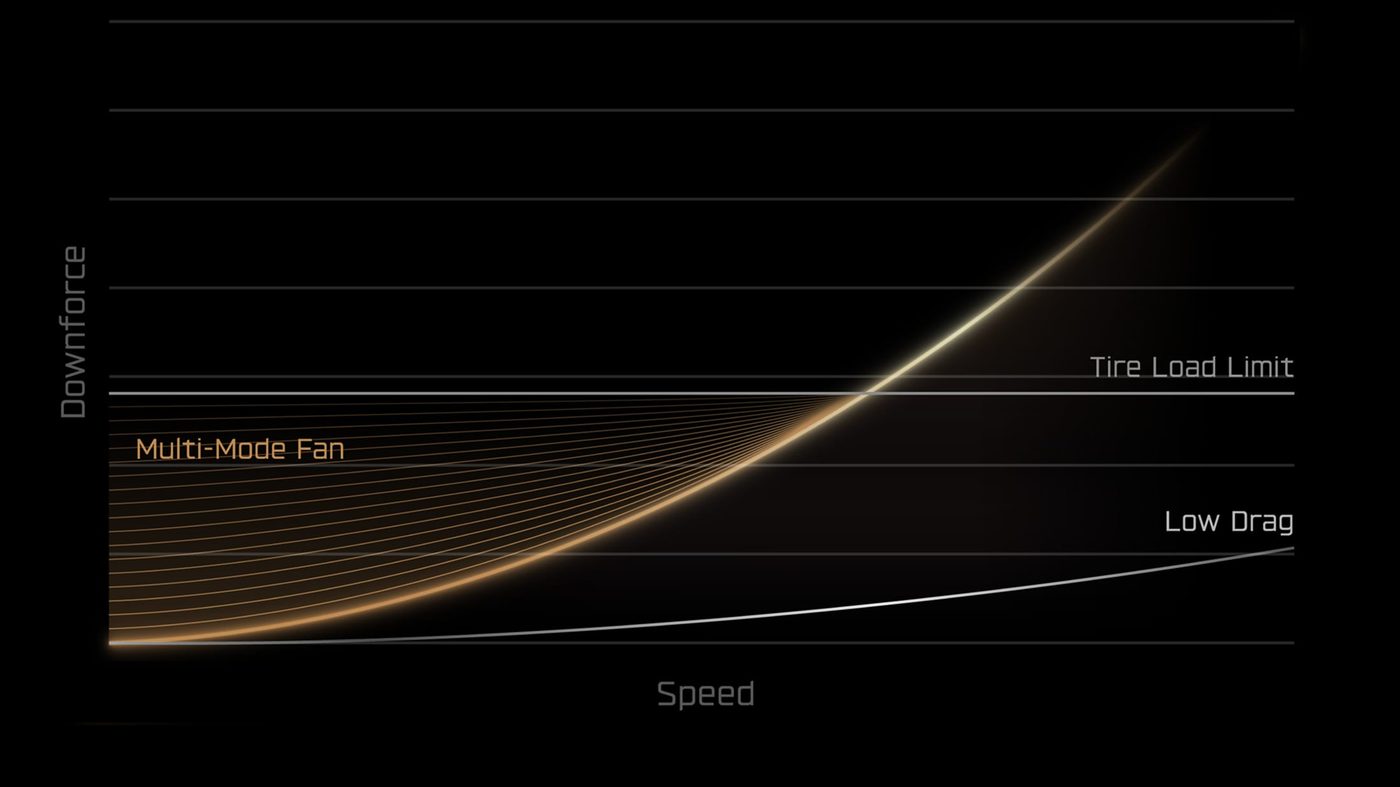
There are two systems at work, and only one of them is a rocket. The first is suction. Tesla says a multi-mode fan and ground-sealing system pulls air from beneath the car as a downforce generator, with enough pull to hold it upside down even when stationary.[5] Musk said it should help the car stay glued to the road in fast corners.[4]
- Tesla
What it is
A multi-mode fan and ground-sealing system that pulls air out from beneath the car, acting as a downforce generator.
- Tesla
What it does
Tesla says it gives enough suction to hold the car upside down even when stationary, and adds traction and cornering speed.
- Musk
Why it matters on a road
Musk said it will help the car stay connected to the ground during fast turns.
Wording paraphrased from Tesla’s Roadster page and Space.com’s account of Musk’s remarks.
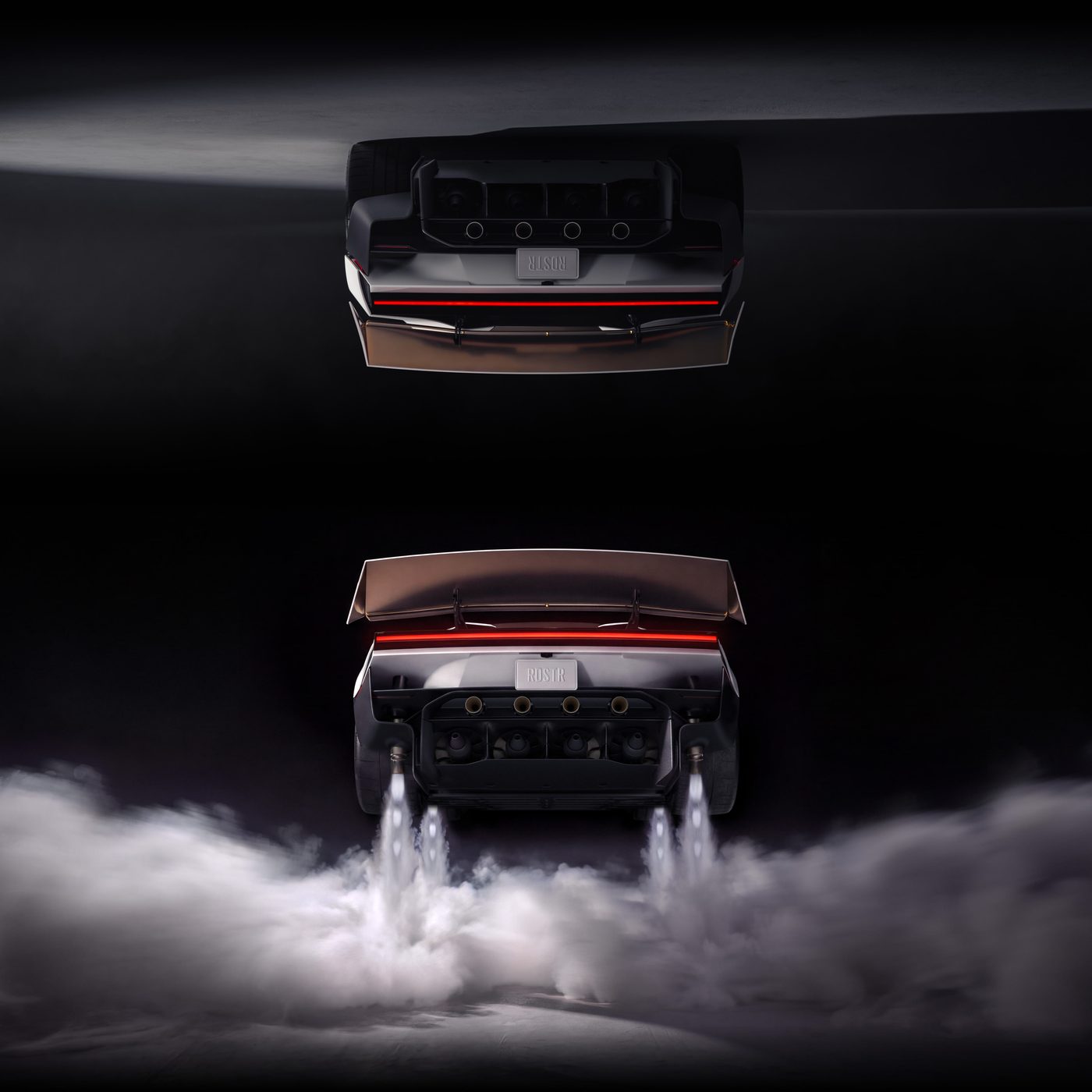
The second is the thruster system. “Cold-gas” means these are not combustion rockets: they release compressed air. Tesla’s engineering vice-president Lars Moravy said the car has 10 thrusters fed from 600 litres of compressed air, stored in carbon-fibre-wrapped pressure vessels that fill every usable void.[4] Musk said the main thrusters are at the rear, with attitude-control thrusters that steer the car’s orientation.[4] Tesla said on X that the thrusters produce four to five times the force the tyres can.[2]
10
Thrusters
Tesla engineering VP Lars Moravy
600 L
Compressed air
about 250 kg, per Space.com
COPVs
Pressure vessels in “every usable void”
Tesla on X
4–5×
Thruster force against what the tyres give
Tesla on X, as quoted by Fox Business
Musk said the car has main thrusters at the rear and attitude-control thrusters that steer its orientation. Moravy said the tank can be recharged. All figures are Tesla’s claims, not measurements.
What reserving costs
There is no price, but there is a way to put money down. Tesla’s reservation page shows $5,000 due today for the Performance version, labelled “fully refundable”, and a further $45,000 due within 10 days, so $50,000 in all.[7] The page warns that reservations are not final until payment is received and that refunds for modifications are not issued.[7]
Performance: $50,000
$5,000 due today, shown as “fully refundable”, then $45,000 within 10 days. The page says reservations are not final until payment is received.
Thrust: $250,000
TechCrunch and Fox Business report this reservation payment. Tesla’s page lists the trim as “limited”. We did not see this figure on the page ourselves.
Rocket: invite only
Not open for reservation. No price shown.
These are reservation payments, not the price of the car, which Tesla has not announced. Fox Business notes that about a decade ago Tesla quoted a base price of $200,000.
TechCrunch and Fox Business report a $250,000 reservation payment for Thrust, and describe Rocket as invite-only.[3][2] A reservation is a place in a queue for a car that may not exist until 2028. Check the terms on Tesla’s page before paying anything.
Safety and the regulators
Musk was direct about priorities. At the event he said it is “not necessarily a safety-optimized car”.[4] Earlier this year, on a podcast, he said that if safety is your first goal you should not buy the Roadster, and that Tesla would “aspire not to kill anyone in this car”.[3]
Regulators have not caught up. The Federal Aviation Administration told CBS News the vehicle does not meet its definition of an aircraft. The National Highway Traffic Safety Administration normally oversees cars but delegates safety certification to the manufacturer. A senior transport official was sceptical it could take off, but said there was no clear answer on who would oversee it.[1]
What Musk has said about safety
- At the event: “not necessarily a safety-optimized car”.
- On a podcast earlier this year, as quoted by TechCrunch: if safety is your number one goal, do not buy the Roadster.
- Tesla would “aspire not to kill anyone in this car”.
What the regulators said (CBS News)
- The FAA told CBS the vehicle does not meet its definition of an aircraft.
- NHTSA normally oversees vehicles but delegates safety certification to the maker; it had not responded.
- A senior transport official was sceptical it could take off, but said there was no clear answer.
Tesla’s page says the car is not approved for public road use. Space.com adds that it is hard to imagine the flying version being certified for everyday use.
The AI claims we were handed
This article began with a block of text that described the Roadster as an “intelligent” machine: machine learning balancing the thrusters, predictive tuning of torque, a Grok voice assistant in the cabin, and “Guardian Angel” neural networks that brake and steer to prevent crashes. We do not know where the text came from. We checked each claim against Tesla’s own pages and the four reports.
- Control: yes. ML: not stated
“Machine-learning algorithms and high-speed sensors balance the thrusters and suction.”
Tesla’s page says the thrusters use all-electric actuators to make micro-adjustments within a fraction of a second to help stabilise the car in flight. It does not say machine learning or name sensors.
- Not supported
“The computer adjusts torque from your driving style, road and tyre grip to allow sub-1-second 0–60.”
Not in any source we read. Tesla attributes the sub-1-second figure to the Thrust trim’s rear thrusters, and says the thrusters add 4–5× the force tyres can give.
- Not found
“Tesla’s Grok assistant acts as a conversational co-pilot in the cabin.”
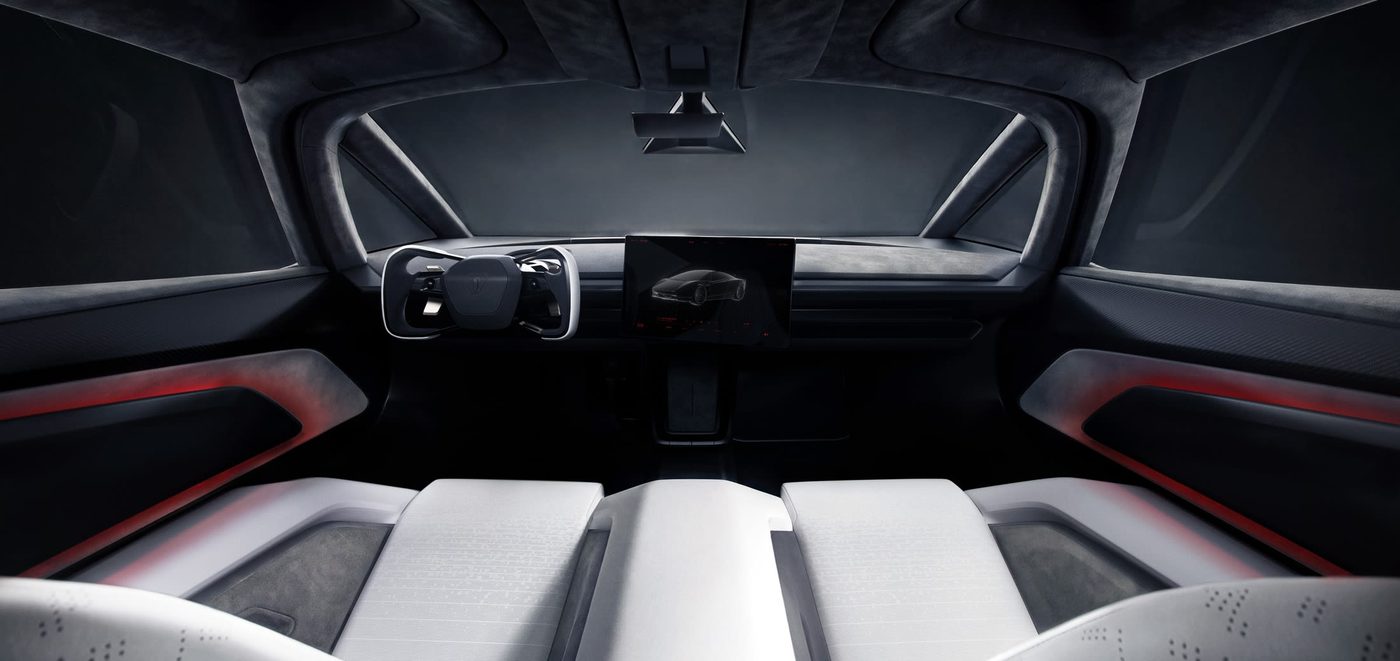
Not found on Tesla’s Roadster page or in the four reports. The page describes a yoke for steer-by-wire, a centre touchscreen and two smaller forward displays.
- Not found
“Guardian Angel” neural networks brake and steer to prevent collisions.
Not found. Musk called it “not necessarily a safety-optimized car” and said safety is not the main goal.
Claims from a text we were given, whose origin we do not know. “Not found” means absent from the sources listed, not proof the feature does not exist. Tesla may say more later.
The result is mixed. The thruster claim has a real basis in Tesla’s description of fast actuator control, but nothing says machine learning is involved. The torque-tuning claim confuses the cause: Tesla attributes the sub-one-second time to the rear thrusters, not to software that learns your driving.[5][2] The Grok and “Guardian Angel” claims do not appear in any source we read. The safety claim also sits awkwardly with Musk’s own words about priorities.
“The best of the last human-driven cars”
Tesla wrote this phrase on X, as Fox Business reports, and TechCrunch quotes Musk using similar words. A Cybercab was among the Tesla vehicles the Roadster jumped over at the event.
Control, not “AI”, is the claim
What Tesla describes is fast control engineering: actuators, fans, active wings and steer-by-wire. That is precise and impressive, but it is not the same thing as AI, and Tesla did not call it that on its page.
The “Our reading” card is our interpretation, an illustration rather than a Tesla statement.
None of this proves the features do not exist. Tesla may announce more, and its page describes a car still two years from production. But a published article should not state as fact what its sources do not say. That is the standard we applied.
Where the sources disagree
A product launch produces a flood of quick stories, and they do not always agree. We found four small conflicts, and checked each against Tesla’s pages where we could.
- Resolved
Deposit: $5,000 or $50,000?
Both are right. CBS reported the $5,000 due today; TechCrunch and Fox reported the $50,000 total. Tesla’s page shows $5,000 now and $45,000 within 10 days.
- Resolved
0–60: “under a second”, “one second” or 0.81?
All three are Tesla’s own. Its page says “under 1 second” for Thrust, TechCrunch wrote “one second”, and Tesla’s X account posted a clip captioned “0-60 mph in 0.81 seconds” on 16 October. They are consistent, but 0.81 is a claim from one video, not a measured test.
- 15 Oct
Event date: 15 or 16 October?
The event was Thursday 15 October in Texas. Space.com’s text says “last night (Oct. 16)”, which conflicts with its own and others’ dates.
- Same place
Where: Waco or McGregor?
The SpaceX test site is in McGregor, near Waco. Both are used.
What nobody knows yet
The honest list of what we cannot say is long. There is no price, no independent test, no clear legal path for the flying version, and no description of how the stunts were controlled. Wall Street is also cautious: analyst Dan Ives wrote that the Roadster will not move volume or revenue, and described it as a way to restore the brand’s halo.[1]
- Unknown
Price
Not announced. Reservation payments are not a price.
- Unknown
Which trims will actually ship
Performance is “by reservation”, Thrust “limited release”, Rocket “invite only” and “not available in all regions”.
- Unknown
Whether the flying version can be legal to use
No agency has a clear answer, per CBS.
- Unclear
How the stunts were controlled
The driver’s seat held a mannequin. The sources do not describe the control system.
- Unclear
Independent performance figures
None yet. All numbers are Tesla’s.
- Soon
Tesla’s quarterly results, 21 October
CBS cites an analyst expecting the Roadster to be a halo, not a revenue driver.
- Next
A price and a spec sheet
Until then, treat every figure as a target.
- Next
Regulators
Whether NHTSA or the FAA issue statements on a road-legal and a flying version.
- Later
Independent tests
None can happen before cars exist; production is planned for 2028.
The message
Tesla showed a car doing something no road car has publicly done: hanging upside down on suction and rolling through the air on compressed-air thrusters. That is genuine engineering theatre. What it has not shown is a finished product, a price, or an AI brain. The version that the pitch calls “intelligent” is, in the sources we can read, a story about fast control of fans and thrusters, and a promise for 2028.
The Roadster is a demonstration with a deposit page; read the specifications as targets and the AI features as unproven until Tesla publishes them.
Quick quiz
Tap a question to check your answer.
Q1When and where was the Roadster revealed?
Thursday 15 October 2026, at a SpaceX rocket-testing site in McGregor, Texas, near Waco, livestreamed on Tesla’s X account.
Q2What are the three versions, and which one is said to do 0–60 in under a second?
Performance (road ready), Thrust (race ready) and Rocket (air ready). Tesla’s page attributes the under-one-second figure to Thrust.
Q3What does a Roadster reservation cost?
For Performance, $5,000 due today and $45,000 within 10 days, $50,000 in total, per Tesla’s page. Thrust is reported at $250,000. These are deposits; there is no announced price.
Q4Do the sources say the Roadster uses machine learning, Grok or a “Guardian Angel” safety system?
No. We found none of these in Tesla’s Roadster page or in four news reports. Tesla describes electric actuators for thruster control, and Musk says it is not safety-optimised.
Q5Can the flying version be driven on public roads?
Tesla’s page says it is not approved for public road use, and the FAA says it does not meet its definition of an aircraft.
References
The sources behind this article: original papers, official announcements and documentation. Each link was opened and checked on ; documentation without a fixed date is cited as it read that day.
- [1]
CBS News (with AFP) (15 October 2026, updated 16 October). With Tesla Roadster debut, Elon Musk shows “flying cars are real”. CBS News.
Reporting · Supports: The event on Tesla’s X livestream, Musk’s quotes, the $5,000 deposit, FAA and NHTSA positions, analyst view and the 21 October earnings date
- [2]
Mion, L. (15 October 2026, updated 16 October). Tesla’s new Roadster makes a flying debut, hitting 60 MPH in under a second. Fox Business.
Reporting · Supports: Tesla’s 4–5× thruster-force claim, the $50,000 and $250,000 reservation payments, the 2017 base price and 2020 delivery promise
- [3]
O’Kane, S. (15 October 2026). Tesla reveals SpaceX-powered Roadster that flies and falls with style. TechCrunch.
Reporting · Supports: The demo and vehicles jumped, trims, 300 miles and 230 mph, 2028 production, reservation payments, delay history, Musk’s safety remarks
- [4]
Wall, M. (16 October 2026). SpaceX thrusters just made a Tesla Roadster ‘fly’ (and Elon Musk’s car is still out there in space). Space.com.
Reporting · Supports: 10 thrusters and 600 litres of compressed air, main and attitude-control thrusters, the mannequin driver, Musk’s “not necessarily a safety-optimized car”
- [5]
Tesla. Roadster. Tesla (opened in a browser, 18 October 2026).
Announcement · Supports: The three versions, the suction system, cold-gas thrusters with all-electric actuators, 0–60 in under 1 second for Thrust, and “Not approved for public road use”
- [6]
Tesla (@Tesla) (16 October 2026). 0-60 mph in 0.81 seconds. X (a video post, read without logging in).
Announcement · Supports: Tesla’s own caption for a 0–60 clip; compared with the “under 1 second” on its Roadster page
- [7]
Tesla. Reserve Your Roadster. Tesla (opened in a browser, 18 October 2026; nothing entered).
Announcement · Supports: $5,000 due today (fully refundable) plus $45,000 within 10 days for Performance; Thrust limited, Rocket invite only
How this article was made
Researched and drafted with the help of AI assistants, checked against the sources above, and published by Mrinal Singh Raja as general information, not professional advice. Facts come from the sources listed and may change, so please check them before relying on them. Spotted a mistake? Tell us and we will correct it. Our editorial standards explain how AI is used here.
Tesla, SpaceX, X, TechCrunch, CBS News, Fox Business and Space.com are independent of MSRX; this article is not affiliated with or endorsed by any of them. Tesla’s Roadster and reservation pages were opened in a browser on 18 October 2026; nothing was entered or submitted. Quotes are word for word from the linked sources. Facts were checked on 18 October 2026 and may change; Tesla’s pages can be edited at any time. All performance figures are claims by Tesla or press reports, and none has been independently tested.